
Tips / Unique Solution
Intermediate
Unique Solution
1. No conflict ≠ correct
Many beginners think:
“This number doesn’t appear in the row, column, or box—so I can place it.”
It sounds reasonable, but it’s often wrong.
Why?
Because Sudoku isn’t “pick any number that is legal right now”.
It’s a logic puzzle designed to have one complete solution.
So the number you place:
- may not conflict immediately
- but it can still force a future row / column / box into a dead end
That’s why in this app you may see:
no visible conflict yet, but the move is still marked as wrong.
It’s not because the board conflicts now—it’s because:
that value cannot belong to the puzzle’s unique solution.
2. An example: looks legal, but leads to a dead end
Let’s walk through a small example with images.
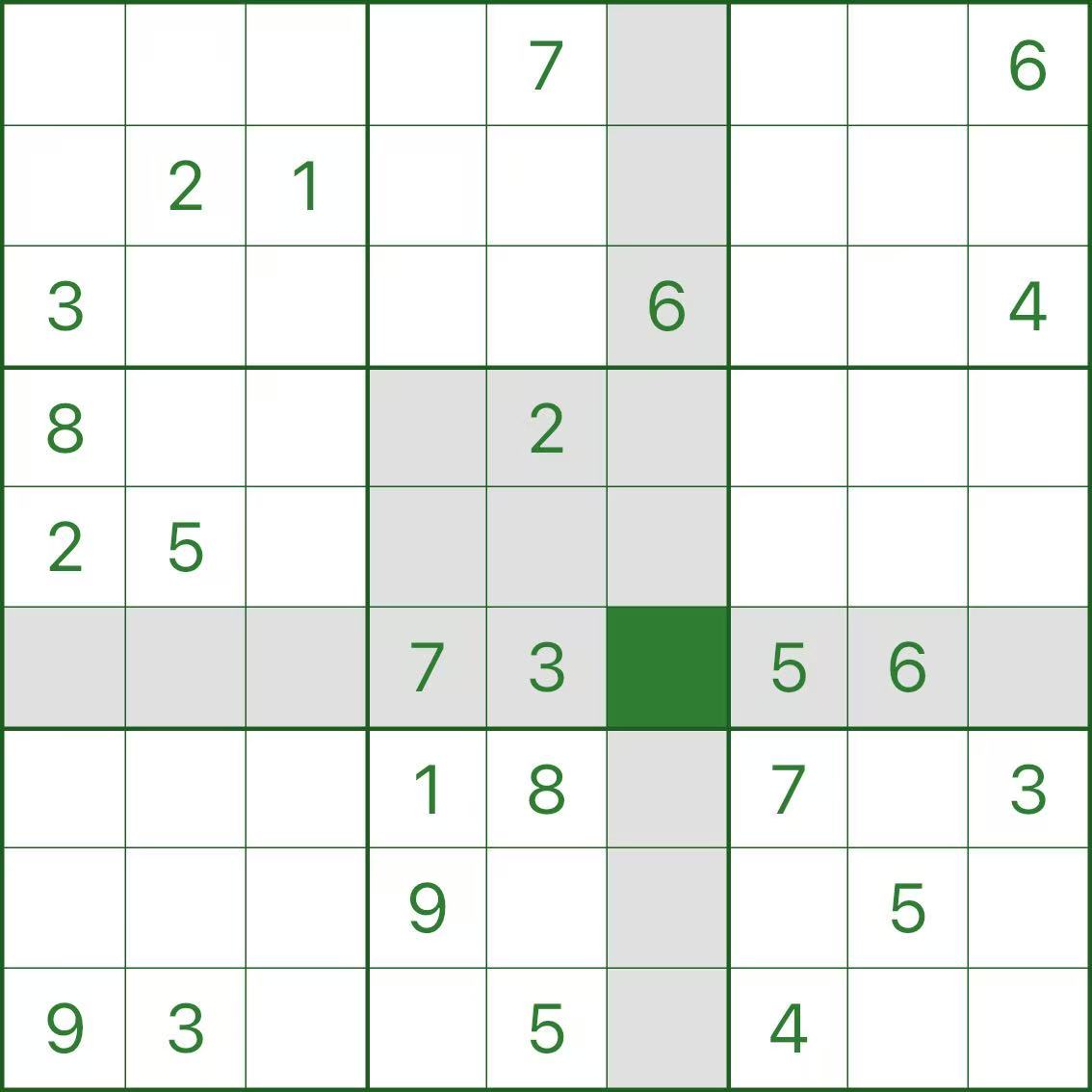
Step 1: r6c6 seems like it could be 1
Look at the highlighted cell r6c6. In its row, column, and box, there is no 1.
So you might think: let’s place 1 here.
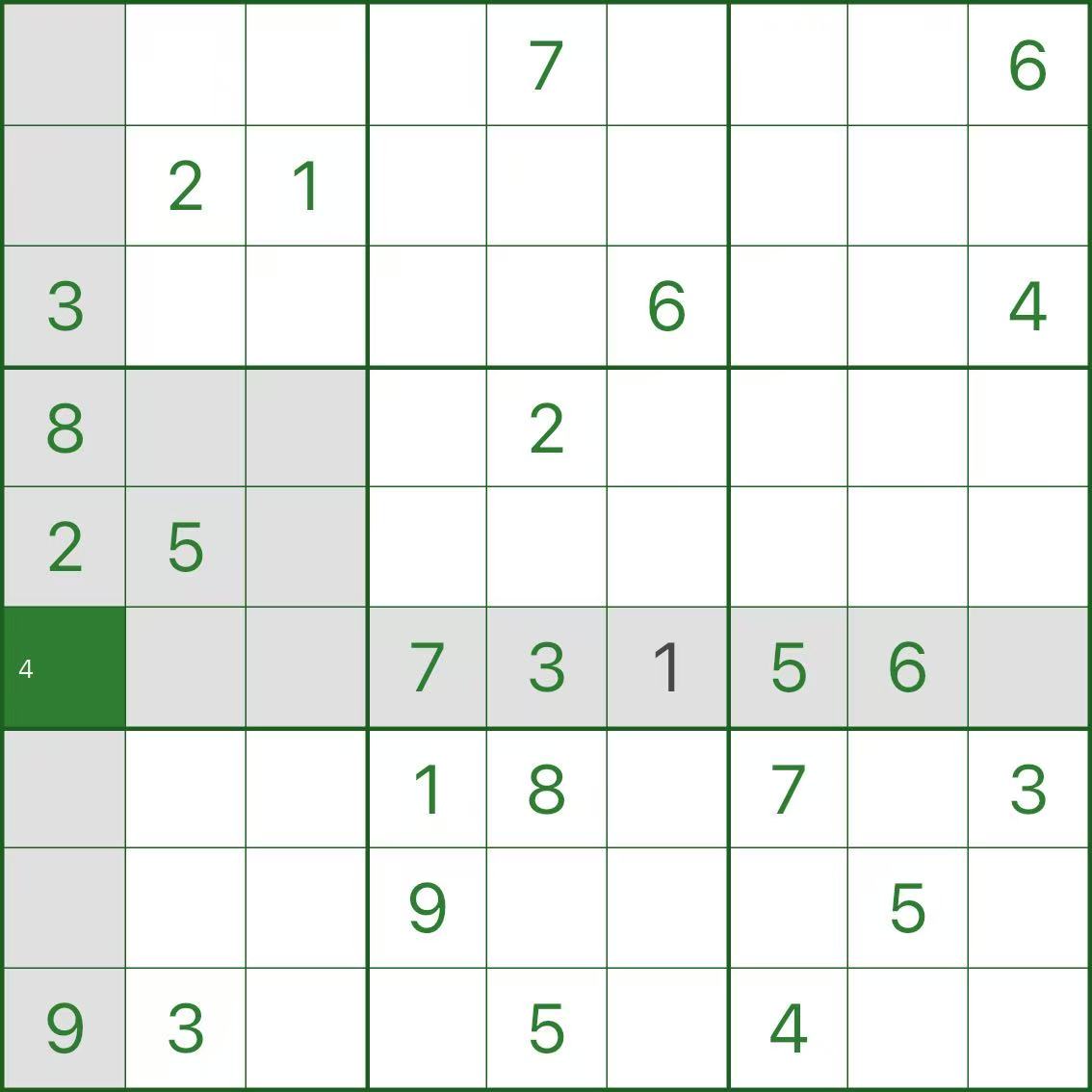
Step 2: r6c1 is forced to be 4
Now check the highlighted cell r6c1.
If you cross out the digits that already appear in its row, column, and box, only one option remains: 4.
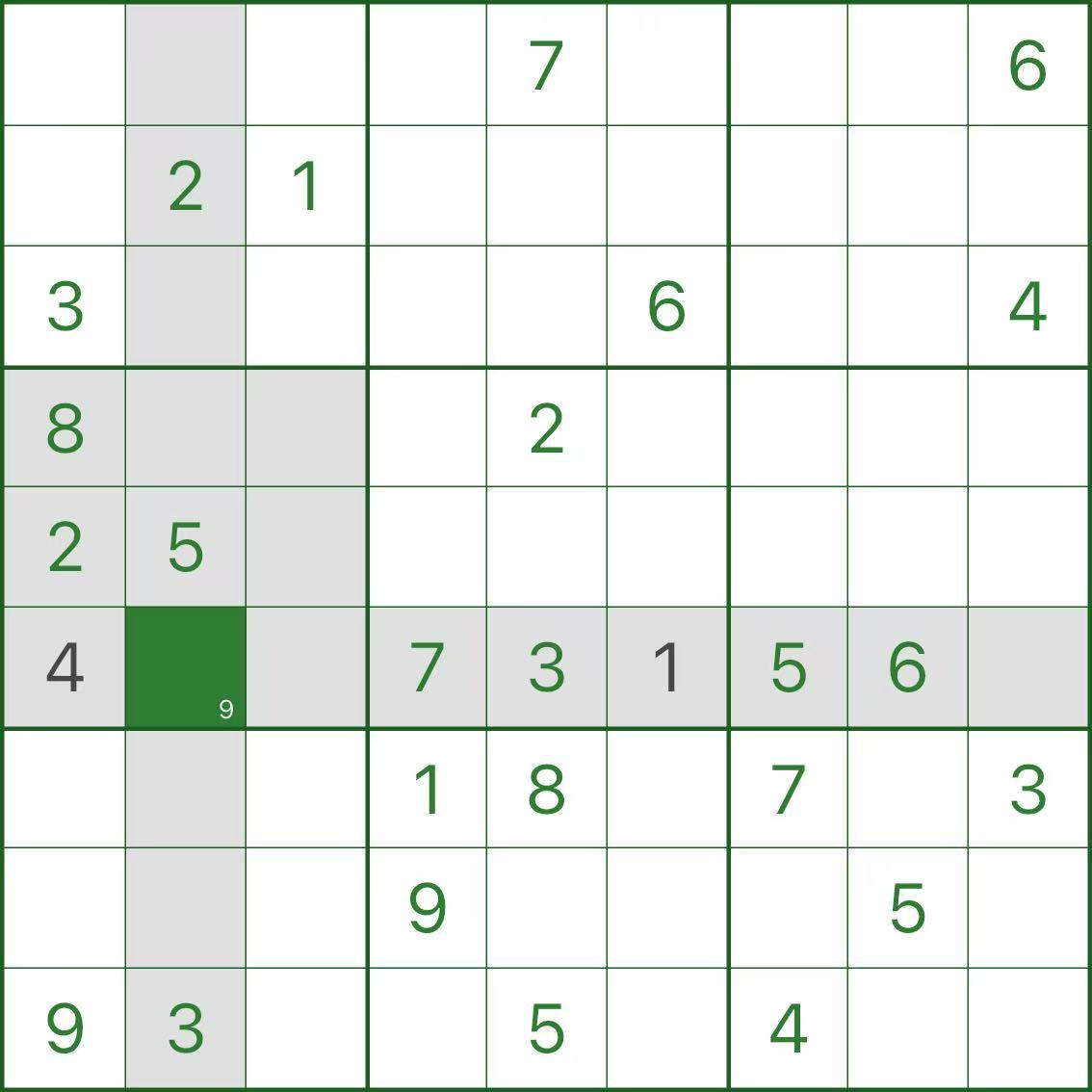
Step 3: r6c2 is forced to be 9
Next, look at r6c2. Do the same elimination, and you’ll find only one option remains—9.
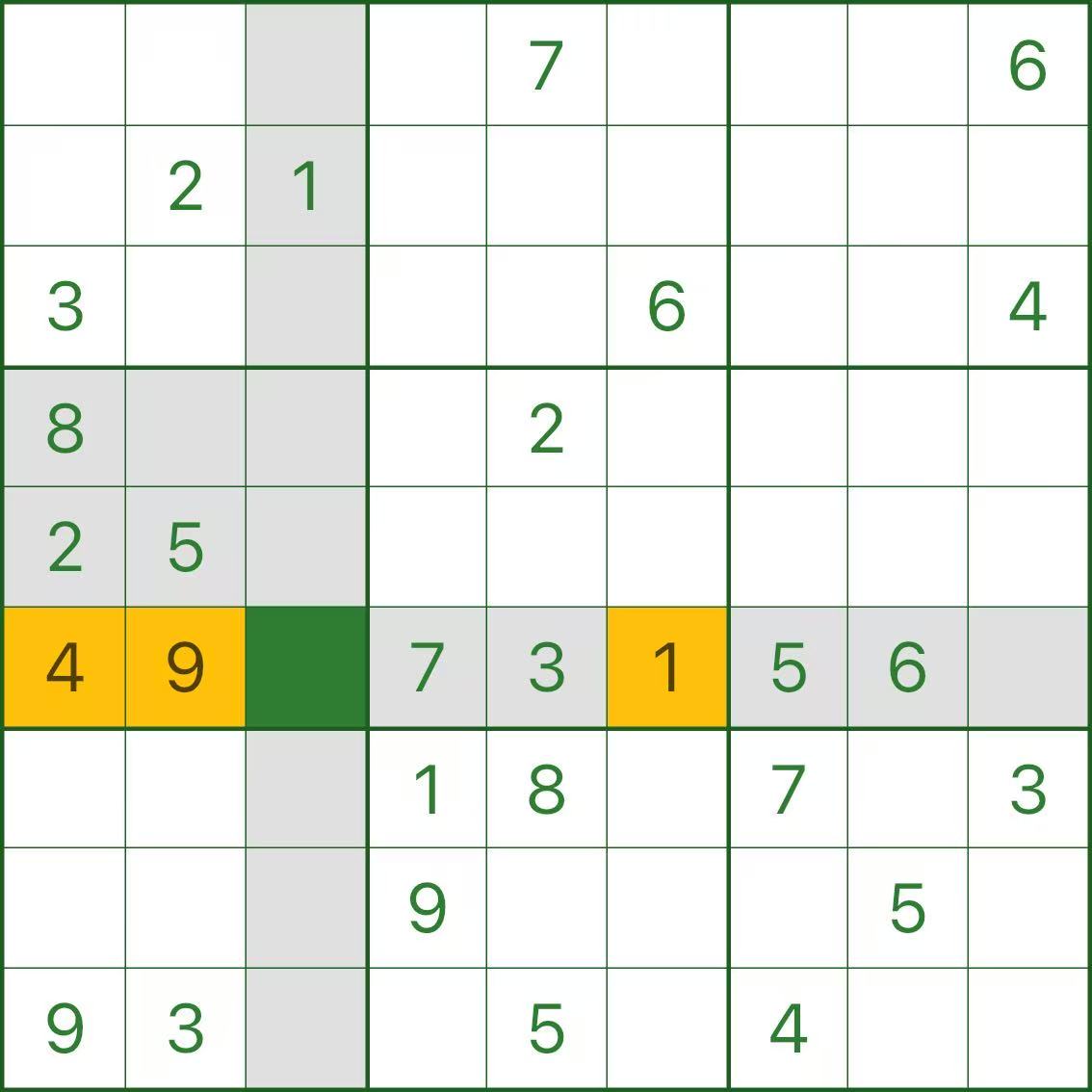
Step 4: r6c3 ends up with no possible number
Now we reach r6c3. You’ll see that:
every digit from 1 to 9 is blocked by its row/column/box, so nothing can be placed there.
In other words, the first “no-conflict” move eventually pushed the puzzle into a dead end.
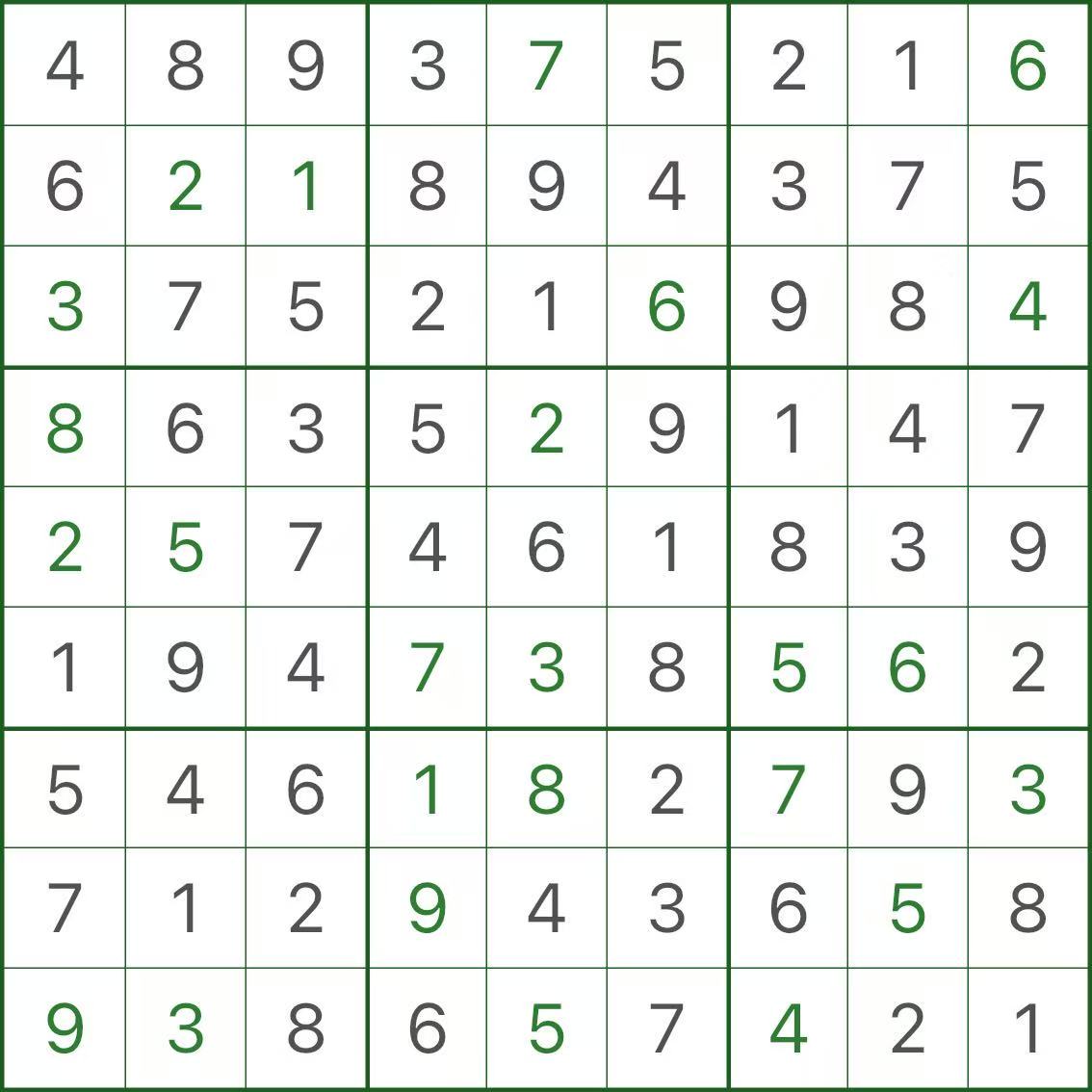
Reference: the correct solution
Here is the correct solution for this puzzle so you can compare:
3. The right mindset: prove “must”, not just “can”
The most important habit in Sudoku is:
Don’t place a number just because it can go there.
Place it only when you can prove it must go there.
When you’re not sure, do this instead:
- write down pencil marks (possible candidates)
- use elimination and other techniques to reduce candidates step by step
- until a cell has only one candidate left, or a digit has only one place in a row/column/box
This keeps every move explainable—and makes it much clearer why a hint is valid.